Showing posts sorted by relevance for query black anger. Sort by date Show all posts

Wednesday, May 28, 2008

refuse to listen to black anger


[Update: This post deals with the difficult issue of racial anger. I've revised it somewhat in light of reader comments below, but I'm still not sure it says what it says accurately and fairly, especially in my efforts to account for common forms of black feelings and behavior. I do think there are common white and common black differences in this area, and I'm trying to spell out, especially, some common and domineering white modes of thought and behavior that often arise during conversations about race with non-white people. Finally, I'll add here that in a post entitled "The Privilege of Politeness" at Angry Black Woman, Naamen Gobert Tilahun says some of things I was trying to say here better than I did.]
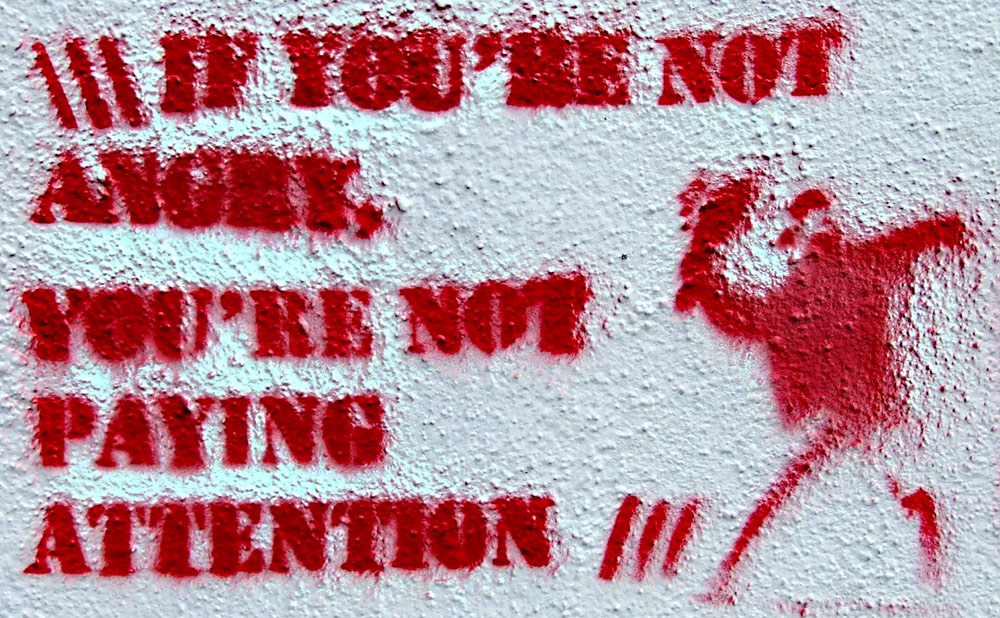


Because black people have long had to study white people if they want to be safe and successful, and because white people rarely have to study black people if they want to be safe and successful, whites tend to have a harder time understanding blacks than most blacks do understanding whites.

White people also usually have a hard time realizing that in some ways, black people tend to see the world differently from how they do. Consequently, white people often get confused, dismissive, or frustrated if black people insist that they experience the world differently, and therefore see it differently.

If black people also insist that a historical legacy of mistreatment at the hands of whites also has a lingering effect on how they see the world, things can get so far beyond the range of white ways of seeing the world that they usually change the subject, or throw their hands up and turn away, or even leave the room.

As they do so, over these and other racial disagreements, these white people often say something like, "If you're going to get emotional, then I can't discuss this with you." For white people in such discussions, anger tends to be a dangerous force that blows out the light of reason. They may not realize it (middle-class ones, especially), but white people often insist that such discussions be conducted in their way. Their calm, rational way, that is, and if they're talking to someone raised to discuss "hot topics" in an more emotionally engaged way, they not that way. (And guess who's automatically at an advantage in calm, rational discussions, if they've been raised to discuss controversial issues in a calm, rational way?)

So white people can get confused or fed up in discussions about things that make some black people angry. That's understandable, really, when you realize that whites have been trained to think that the way they see the world is pretty much the normal way--the way everyone else does, unless there's something wrong with them. Unless they're "biased," or "subjective," something that (from a white perspective) being white supposedly doesn't do to a person, and something that being black supposedly does do to a person.

This unconscious presumption of white objectivity, as opposed to supposed non-white subjectivity, is also why white people who talk about racial issues get a lot more attention and credit from white listeners than people of color who say the same damn thing. This is the kind of blindly applied double standard that also happens with supposedly objective male speakers or discussants and supposedly subjective female speakers or discussants.

So because whites tend to be wrapped up this way--in their supposedly objective, ironically racialized perspective--one of the things that they never seem to quite get is collective black anger (which is not to say, by the way, that there are no common forms of collective white anger, such as ill-informed notions about affirmative action). This common white obstinacy became openly apparent when Barack Obama's pastor, Reverend Wright, expressed anger at America, and made an emotional call to God to "damn America" unless it started treating black people better.

Reverend Wright later said things that struck most white folks as so outlandish that Obama finally bowed to pressure by repudiating both the words and the man. The supposedly important connection between Wright and Obama is old news by now (not that some white people are going to let Wright and his words go away), but many white people still wonder—if Wright said things like that in church, then why did Obama attend that church for twenty years? I think it's probably because in that church, Obama cut Reverend Wright some slack.

I think that if Obama was in church on that particular day, he and the other people there would've understood that Wright wasn't actually asking God to damn America. Instead, one of a black reverend's functions in such moments, in many black churches, where people aren't so pent up and repressed that they've pretty much separated their emotional life from their religious life (if they have a religious life)--in those kinds of moments, what Wright may have been doing was helping his congregation express some of its anger. (Or maybe not--this is conjecture on my part.)

And as I understand it, yes, black people still do have a lot to feel angry about, and no, many of them won’t just bury or try to forget that anger like white people wish they would. Sometimes they let it out, which is probably healthy, and sometimes when they do so, they say things they wouldn’t say at other times.

White people often forgive their own friends or family members for saying things in anger that they wouldn't say otherwise. Why can't they do the same for black people?

I think they can't because it is "black anger," which as I wrote above, white people don’t understand, and sometimes don’t want to face up to, especially if they feel like a target for that anger. But white people also find it difficult to overlook black anger in a collective sense because white anger, when it's expressed, is more contained, more localized, and, from a white perspective, more individualized.

Most white people don't have a collective sense of themselves as a group nearly as much as many black people do (thanks largely to whites grouping blacks together for several centuries now, in order to treat them accordingly). So while white people get angry at work, or on the road, or in their homes or during a baseball game, they rarely get angry together as a racial group. That's because white solidarity has been atomized into supposedly non-white individuality. And also, after all, considering that as a group, whites are still by and large on top in American society, what do whites realitically have to get angry together over, as a racial group?

Again, black people understand white people better than the other way around, and one of the things they usually know is what I'm basically trying to say here--that whites don't understand collective black anger. White people don't understand the causes that justify it, so they don't understand most of what gets said, nor the ways in which it gets said. And finally, if that anger gets expressed in a manner or "tone" that differs from their own, they're apt to turn away, unless the discussion can be conducted in their preferred manner, instead of someone else's.


Thursday, May 14, 2009

prefer babyfaced black men

As a child I was taught, without anyone actually saying so, that because I'm white, I'm different in a lot of ways from people who are not white.

Actually, the basic lesson was more like this--they were different from us.

We were "normal." They were "different."

In the city where I lived this was a completely black-and-white thing, but to us, their blackness was always a lot more noteworthy than our whiteness.

My parents did not consider themselves "racists"; nevertheless, I was basically kept away from black people. Then at the age of ten, I was taken even further away, when my family moved to the suburbs. I now see that in addition to me being kept away from them, forces larger than my parents also worked to keep them away from us.

The members of the group that I was in rarely declared their whiteness, but the implication that we were a distinct group was pretty much always there. So was the implication that we were superior. And so were other implications about "them," aside from inferiority--that they were scary. Intimidating. Dangerous.

As an adult, I came to think that I'd outgrown any racist influences from my childhood. But now that I've been thinking for awhile about what I went through in my childhood as a sort of training into whiteness, I know that the racism, toward black people and other non-white people, is still inside of me.

This instilled racism emerges sometimes, in ways that feel like a lot like a reflex, or an instinct. Now that I know that I still have racist impulses, and that they're not something so natural as a reflex or an instinct, I try to become and remain aware of them. I hope that by doing so, I can unlearn such impulses.

I do not mean to say that I walk around with a constant, cringing fear of every black person I don’t know, nor that other white people do so. However, I do think that to some degree, most white people react to people of other races for reasons that they don’t realize, let alone understand.

I wonder what it is, for instance, that makes a black person that I meet, and then like, seem "likable" to me.

Since I was trained as a child to be wary of black people, and since that training was so ingrained in me at that impressionable stage that some of it still remains, then does something happen during my interactions with “likable” black people that overcomes that early training?

Do I "like" that person because I've overcome the training that told me, and still tells me, that that person is fundamentally different from me--as in, scary, or intimidating? Or even dangerous?

Or do I like that person because he or she seems especially non-threatening somehow? As if that person, instead of me, is the one who's somehow overcoming my deep-seated worries and fears, perhaps by seeming to be especially nice, or friendly, or "open"?

While both of these possibilities could well be at play, a recent university study, of common reactions to the faces of black men, suggests the latter—that something about the black person I decide is likable has worked to disarm me, by calming my largely unconscious fears.

One particular characteristic that this new research suggests I will respond to positively is a "babyface"--a black man with a face that resembles that of a baby.

If I’m reading the reported results correctly, because my whitened psyche wants reassurance that unfamiliar black men are not a threat, I prefer those who have a face that at some level reduces the level of threat to that of an infant.

This white preference for nonthreatening, “babyfaced” black men might seem absurd and ridiculous, but it's apparently so prevalent that it helps those who are endowed that way succeed professionally.

As the Associated Press reports,

Black Fortune 500 CEOs with a "babyface" appearance are more likely to lead companies with higher revenues and prestige than black CEOs who look more mature, an upcoming study says.

In contrast with research showing that white executives are hindered by babyface characteristics, a disarming appearance can help black CEOs by counteracting the stigma that black men are threatening, according to the study from Northwestern University's Kellogg School of Management. . . .

A babyface is characterized by combinations of attributes, including a round face, full cheeks, larger forehead, small nose, large ears and full lips, the study says.


Isn’t this kind of bizarre? That non-black people prefer black men in positions of power who have faces that suggest a lack of power?

Regarding this study’s methodology and results, the AP story continues,

A group of 21 college students was shown photographs of 40 current and past CEOs of Fortune 500 companies. Eleven of the students were white, 10 were Asian and 10 were female.

Of the 40 CEOs, 10 were black (only 10 blacks have ever led Fortune 500 companies). For every black CEO, a current or former white CEO from the same company was included. Another 10 CEOs were white women, and 10 white male CEOs were chosen at random.

Participants rated each photo on scale of 1-4 for "babyfaceness," leadership competence and personal warmth. . . .

The results showed that black CEOs who rated high on the babyface scale worked for companies that ranked higher in the Fortune 500 and had higher annual revenues than blacks with more mature faces. The reverse was true for whites — the more babyfaced CEOs tended to work for companies that ranked lower and had less annual revenue. . . .

The study was duplicated with 106 student participants, with similar results.

Livingston said the study indicates that "disarming" characteristics, which have been shown to hinder white executives, can help black leaders.

"Physical appearance, how you behave, having mixed-race parents — anything that conveys to whites 'I'm not the typical black man' can be helpful," Livingston said.

That leads to the idea that black executives face a double standard, he said.

"If you're a white male, you can exhibit anger, pound your fist, make ultimatums . . . African-Americans have to adopt a kinder, gentler style of leadership," Livingston said. "The same sorts of behaviors that are effective for white males can't be utilized effectively by black males."

Livingston said his conclusion is not that babyfaced black CEOs reached the pinnacle of success because of their looks: "I'm saying that African-American leaders have to adopt certain qualities or behaviors that make them appear less threatening . . . a babyface gives a certain perception that they're docile."

Right, “docile.” Which is just the quality that I, as an average white person, am probably looking for at some level when I meet a new black person. Male or female, I suspect.

The AP story also reports the reaction of Leslie Zebrowitz, a professor of psychology and social relations at Brandeis University “who was not involved with the study.” Dr. Zebrowitz called the findings “new and ‘compelling.’”

I too find the results compelling, but not exactly new. Surely this study demonstrates instead something very old—the common, ingrained need on the part of white people for reassurance that their deep-set fears of blackness can be set aside during encounters with black individuals.

I also suspect that these findings are anything but “new” for most black people. Indeed, as the AP story also reports,

The results rang true for Michael Hyter, the black president and CEO of the management consulting firm Novations Group Inc. and co-author of the book "The Power of Inclusion."

"For anyone who's honest in the corporate space, you know that (disarming mechanisms) are a key to being successful," he said. "Technical skills are not enough. They need to get to know you based on who you are and not make a judgment on how you look."

I think it’s just a damn shame that black people who want to succeed while working with non-black people have to develop such “disarming mechanisms.” It should be up to white people to disarm themselves, by discovering and identifying their own fears, and then by working to get over them.

This white preference for babyfaced black men is especially obnoxious, because it's almost literally infantilizing. And that’s truly, sadly ironic, because this infantilizing preference is actually a projection onto black individuals of some fearful, childish part of the collective white psyche.


h/t: all about race

Friday, July 9, 2010

fear black men (oscar grant open thread)


Oscar Grant
(February 27, 1986 -- January 1, 2009)
(
source)


I'm following Average Bro's lead here in opening up the comments to your thoughts and feelings on yesterday's Oscar Grant verdict. Given the racially disproportionate rates at which police brutality continues to occur in the U.S., there's a great chance that if you're white, your feelings are different today from those of a lot of non-white people. Especially a lot of black people, who still suffer the most from police harassment and brutality, as well as the more general American fear of black people.

At "The American Prospect," Adam Serwer made an especially good point yesterday, in a piece on common white fears of black men -- how they likely played a part in Oscar Grant's death, and how the justice system ended up ignoring, yet again, the ongoing history of America's murderous fear of black men:

Today Johannes Mehserle, the former BART police officer who killed Oscar Grant while he was lying face down and handcuffed in an Oakland train station, was convicted of involuntary manslaughter -- his crime, according to the jury, was negligence in not knowing the difference between his heavy black gun and his light yellow tazer. Of the possible outcomes Mehserle was facing, involuntary manslaughter was the best he could have hoped for short of acquittal. He faces a maximum sentence of four years for the original crime, possibly more for the use of a firearm.

I want to focus for a moment on the distinction between voluntary and involuntary manslaughter. To convict on the higher charge of voluntary manslaughter, the prosecution would have had to prove that Mehserle's fear of Grant and his friends was "unreasonable." It decided the crime was involuntary. In other words, Mehserle's fear? That was reasonable.

Fear is at the core of questions of justice involving the deaths of black people at the hands of the authorities in the United States of America, dating back to when Toussaint L'Overture put the fear of G-d in slaveowners by revealing that their "property" might someday rise up against them. L'Overture still has that effect on some people. Following emancipation were the days when "justice" was meted out in the South by terrorists posing as vigilantes. Even then, when such atrocities were an accepted part of black life, people inside and outside the South found ways to sympathize with the anger and fear white Southerners felt towards their black neighbors -- The New York Times editorialized in the 1890s that no "reputable or respectable negro" had ever been lynched.

Even decades after the Civil Rights era, a cop shooting an unarmed black man is barely a crime -- a 2007 ColorLines investigation of police shootings in New York City found that in 12 instances when the victim was unarmed, only one officer was found criminally liable. There hasn't been a murder conviction on a police shooting in Oakland since 1983. As Kai Wright wrote in the aftermath of the Sean Bell verdict, "American law has been sanctioning the killing of black people to mollify white fear for centuries. . . We scare the shit out of America. And that fear excuses just about any reaction it spawns." Mehserle is profoundly unlucky to be punished at all.

Times change, but the radioactive fear of black people, black men in particular, has proven to have a longer half-life than any science could have discerned. This is not a fear white people possess of black people--it is a fear all Americans possess. It makes white cops kill black cops, it makes black cops kill black men, and it whispers in the ears of white and nonwhite jurors alike that fear of an unarmed black man lying face down in the ground is not "unreasonable." All of which is to say, while it infects all of us, a few of us bear the brunt of the suffering it causes. . . . (more)


Serwer also makes this point: "What's worse is that we we don't just fear, we fear talking about it."

Will the corporate media use yesterday's verdict to talk about it?

The answer is easy -- no. But hey, look over there! Violence in the streets of Oakland! Some violence, anyway. Violence in the wake of racial injustice is what gets the attention of the white-framed media, not the injustice itself. As I write this, CNN finds the news of a basketball player's team-switch bigger news; readers have to search more carefully for a link that says, "Hundreds protest after BART verdict."

Would "thousands" have bumped the story up the page? "Hundreds of thousands"? Whatever the number, it's the protests that the white-framed corporate media focus on today as the "story" here. Not the searing injustice of yet another light sentence for the state-sponsored killer of yet another unarmed black man.

What are you thinking and feeling today? And, since this is swpd, are you seeing other common white tendencies in response to yesterday's verdict?

Saturday, April 12, 2008

saturday book rec : the ways of white folks


Most white people don't realize that hundreds of insightful books have been written about them in terms of who they are, as white people. In pursuit of both self-understanding and a broader awareness, I've read a lot of these books, and I'm always reading more. Every Saturday, I'll offer a review of one of the better ones. I'm intentionally starting with a book on whiteness written by a non-white person. I want to acknowledge that the first great intellectual observers of whiteness were black people, members of a group that carefully observed and measured the ways of white folks, because they had to.


Born in 1902, Langston Hughes lived to see the fruition of the Civil Rights Movement that he helped ignite; he died in 1967. White readers now tend to befriend Hughes, selectively enjoying his work as that of a mild-mannered poet, one who asserted the humanity of black people proudly, but quietly. However, to interpret his work this way, even his most famous poems, such as "A Dream Deferred," "Theme for English B," and "I, Too, Sing America," is to overlook the anger and frustration simmering at its core. Hughes' poetic list of possibilities for what happens to a "dream deferred" ends with an italicized warning that if the dream of recognition and equal rights for black Americans is put off much longer, it's liable to "explode" (and indeed, it did). "I, Too, Sing America" has a similar warning, if people are willing to hear it.

In the stories collected in The Ways of White Folks, first published in 1934, Hughes deploys a variety of styles and moods to dramatize and analyze common white behaviors. In the opening story, "Cora Unashamed" (which was Masterpiece-ified by PBS in 2001), Hughes examines, from a black maid's perspective, a respectable white family's destructive allegiance to sexual propriety. "Slave on the Block," in which a couple of socialites adopt a handsome black man as their pet Negro, satirizes some of the more condescending tendencies of the wealthy white patrons of the black arts during the 1920s, when the Negro was in vogue.

In other stories, Hughes steadily unveils his characters' destructive tendencies, diagnosing specific symptoms of their pathological dedication to racial divisions. A white sailor visits one of his favorite black prostitutes but then leaves, unable to acknowledge what seems to him a horror, his own child. A small southern town refuses to acknowledge the genius of one of its own, a black musician returning from a journey to Europe who shouldn't be playing that music, and who shouldn't be dressing so well and then talking to white women, to our women.

In "Passing," a light-skinned man writes a subtly anguished, delirious letter to his black mother, who has agreed to silently pass him by on the street because he's passing for white. In "Father and Son," a proud, patrician Southerner with a kept black maid refuses to acknowledge the humanity of their "black" son, who in turn willfully refuses to suppress his own pride and promise. In all of the stories, tensions and conflicts rise to a boiling point as Hughes deconstructs the absurdities of the fiction that is "race."

In a way, Hughes reminds me of Barack Obama. In Hughes' time and in ours, public figures who are not white have to play a game in terms of race. As with Obama, many whites comfortably embrace Hughes as a black leader who clearly "is" black, but who also seems to "transcend" that blackness. For Hughes, coming across this way was a strategy, a way to lure white folks in with sweetness in order to give them a dose of medicine.

Obama's recent speech on race was written and delivered in calm, measured tones, the polar opposite of the traditional style for serious black oration, as exemplified by Reverend Wright, the black speaker whose very style was what made Obama's speech necessary. Like Hughes in The Ways of White Folks, Obama's speech analyzed both black and white issues with compassionate clarity, and with a directness that he had never displayed before. Time will tell if he'll be able to continue doing so, or if, instead, Hughes' dream of finally dealing directly with America's racial wounds will continue to be deferred.

Monday, January 11, 2010

minimize black heroism

This is a guest post for swpd by Michael Gibson, an artist and humorist who lives in Youngstown, Ohio. He describes himself as a "Short Fat black Guy and Fledgling Writer of sorts, and a married father of four." (You can read more about him below this post.)


Very rarely do our local, white-framed media report on the fact that black people are doing good, charitable deeds in their communities, just as white people are. When they do report on a black person's good work, they frame the piece as if it were the exception to the rule. There’s always a negative taint about the report.

The mindset of the local news media is located where our news anchors hail from—the suburbs. You can easily perceive who the news is targeted to when it airs at 6:00 p.m. every day. Black people clearly don't matter much to the people who write and produce the news, and when we experience tragedy, there is very little sympathy or empathy expressed from whites.

We are portrayed as thugs and criminals, unworthy of equal consideration as people. For the most part, whites frame and report news about blacks in ways that fit their narrow definition of blacks. We are mere stereotypes, bits of statistical data whereby whites judge our worthiness to be amongst them. We are judged on our appearance -- Doo Rags, Saggy pants, Black Male Swagger -- and on our speech, whether we be safe Negro or no. (This in light of Senate Majority Leader Harry Reid commenting that, Obama, as a black candidate, could be successful thanks, in part, to his "light-skinned" appearance and speaking patterns "with no Negro dialect, unless he wanted to have one.")

However, if the perpetrator is white, then the story is that there must be something wrong with him mentally, because good white people just don’t do things like that. The lawbreaker suffers for his crime as an individual, hence the totality of the white race is not blamed for his misdeeds. This is why I don't watch the local news anymore, for it has little to offer in the way of content for a community that’s 40 percent black.

You would think sometimes when you watch the news that black people are invisible. However, whites sometimes remind other whites that we are indeed visible, especially when we do something wrong. Then our picture is splattered on the front page of every local newspaper, with the local reporter using our image as the lead-in. We become relevant either when we offend white sensibilities or violate white decorum.

I really hope white people can come to understand why black people are mad so often. I also hope whites can come to understand (and I know it’s hard) during those times when black anger is turned inward, and we inexorably take that frustration out on ourselves or others. I hope that we can be given the same leeway -- the same consideration that privilege bestows upon them -- to search for the historical and other mitigating factors as to why a person, any person, acts the way they do.

A friend of mine who is an esteemed Pastor and Professor at the local college spoke to me of her experience. She’s been married to a white man (my Pastor) for over 33 years now. Their 23-year-old son was involved in an incident where he rescued four children from a burning house that ultimately burned to the ground; in the process, he sustained 1st, 2nd, and 3rd degree burns to his upper back, the side of his face, and his neck, ear, and arms. The only reason the local news covered the event was because they bowed to pressure from family and friends and those who know them in the community. These were people who wondered why it took so long for anything related to the incident to appear on the local news.

When one station finally got around to reporting this young man’s heroism (4 days after the fact), they made it their last segment. Another station didn't even appear to be interested in this story of a black hero until after the first stations aired it, and the local paper reported it (5 days after the fact). The station that had been pressured into being interested reported first on local taxes, charitable things some whites were doing, local political fights, etc. They waited until the last minute (and that’s how long the segment took, about a minute) to air it.

This heroic deed happened on the south side, in the inner city. This gallant, selfless act took place where the “bad” black people live, so I'm sure it raised a few flags with the white news director. Aside from Will Smith, there aren't too many black action heroes in the media. So it’s hard for whites to see black men as anything other than thugs, rappers or athletes.

It’s to the point where black people aren't noticed until we do something that fits the stereotypical view whites have about us. Then it gives them a framework to fashion their story around. When Michael Vick was busted for his participation in a dog-fighting ring, whites looked to examine the black mindset that motivates some black men (if not all, in their view) who do terrible things like this. White media outlets held panel discussions; experts on human behavior were interviewed at length. Consequently, when black men commit acts as in the case of Michael Vick, some whites respond with a, “well there you go,” and “well what did you expect?”

I remember a young black female news reporter who was hired by one of the local stations; there was a piece about her in the paper. While explaining how excited she was to be working in Youngstown, she lamented that as a black journalist, she was not allowed to tell the stories from the community that she knew the viewers there would be interested in. She would have to toe the party line so to speak, and do stories that appealed to a broader audience. Namely — but not explicitly — whites.

It used to amaze me how white reporters could brave the dark and dangerous streets of the inner city to give white viewers a feel of the gritty underbelly of mainstream society. But then, why couldn’t they just as easily scour the streets to bring us positive representations of blacks as well? Why is it so hard for these same news outlets to view us through the same non-discriminatory lens as they view their own? You can really get ticked off when the news anchor looks you in the eye and says something like, “Bringing you the news that affects our valley! Fair and objective news reporting!” You want to put your foot through the television, because you know that’s a lie.


---

About himself, author Michael Gibson writes,

I was always considered shy and withdrawn as a child. I was drawn to Art at a very early age, owing the spark of my obsession to two young artists in my school named Al Lewis and Bobby Crochet. Both took me under their wings and showed me all they knew. I made my home at the school library, always coming home with a bounty of knowledge under my arms, seldom playing outside with the other children, opting instead to feed from the likes of Michelangelo and Raphael. My gift gave me a sense of purpose, doing a lot to lift my esteem.

Considered eccentric by some, and a loner by others, I was cursed with a young face that didn't help matters much. Being black you are expected to look like you just got out of prison. People always think they have me figured out, sometimes even talking down to me, for they think me to be their junior, rather than their peer or senior. I worked in mental Health for over 19 yrs before going on disability.


I have garnered a host of prestigious awards in such notable shows as the 60th Artist Annual at The Butler Institute of American Art, where I was awarded the Inaugural Margaret Kaulback Best in Show award, for my piece entitled, Dancer at Dusk. I was subsequently awarded a One Man Show in the follow-up event, the 61rst Artist Annual. I have been married to a wonderful woman Karen for 29 yrs now, being the Father of 4 grown children; 3 daughters and a son. I am also the grandfather of 4 beautiful girls.

Wednesday, March 4, 2009

consult the google answer machine

Sometimes I wonder who I'm talking to when I post on this blog.

Who are you folks?

I imagine that although you all have Internet access of some sort, you're all kinds of people. I struggle at times with deciding how much to explain about what I'm saying, how much I can assume my audience already knows about whiteness and racism. It's good to have a wide array of readers, and I want to reach white people, especially, because they're the ones who should be more mindful of their racial status.

Sometimes I lose myself for awhile by digging into this blog's statistics (and by the way, the site counter below will probably reach 200,000 hits today--a milestone, of some sort). As I've noted before, the most interesting set of stats is a log of search phrases that brought readers here. For me, the especially bracing examples resemble those below, which are from the last month or so.

These "search phrases" suggest not only how many different kinds of people end up here, but also just how wide the gaps in racial understanding still are, 400 years or so after the creation of the fiction of "race." Some of these search phrases also radiate frustration and anger, and others read like simmering ingredients for violence and pain.

Our moment is anything but "post-racial," and in terms of race, things are going to get worse. As the current economic collapse worsens, racial resentment will surely serve as an ever-ready distraction from the real causes of chaos. That renowned, divisive and racist hatemonger, Rush Limbaugh, could have no greater gift than two black leaders heading up our two major political parties.


Is sorting through Google tea leaves like this an effective method for monitoring the pulse of the racial zeitgeist?

What do these blips of brain energy say to you?


>>white people need to teach their children to hate those who hate us

>>why are all pretty white girls going for black guys?

>>white daughter black boyfriend

>>WHAT TO DO WITH WHITE DAUGHTER LIKING BLACK BOY

>>what white people really think of black people, even though they are nice

>>why do white people smell like spit?

>>why do white people say a black person is defensive?

>>why does tim wise bitch so much?

>>why do white people look better than other people?

>>why do black people think they are better then white?

>>why do white girls date ni**ers?

>>why do people comment when white guys and black women are together?

>>why do black people say ma'am?

>>why black people have white hands?

>>whites won't admit they came from blacks

>>whites teach their children to be racist

>>when i say bro i mean it the way black people use it

>>why do people think racism is fun?

>>why do people think americans are only white people?

>>do white people ask for hook-ups?

>>how many people admit to telling people they like their shirt when they really don't?

>>when do you bury a dead white person?

>>white comedian who can't make anyone laugh

>>why do white people think about tibet?

>>black and white mixed baby my baby looks more white is that normal?

>>what animal are white people like?

>>what do innocent people think about racism?

>>can children be racist or sexist?

>>what do asians call white people?

>>should someone dress up in another ethnicity?

>>so many non-whites in medicine

>>youtube white supremacy has made white folks insane

>>it is ridiculous to celebrate columbus

>>is wearing an afro wig racist?

>>how to act like a white person

>>how did white people become white?

>>how can you tell if white people don't like black people?

>>why is white race giving in to black race?

>>when is the next civil war?

>>black people talk shit about white people and it's not racist

>>do you think people's prejudices can be overcome?

>>what makes people do what they do?

>>i'm white, what do i do?

Wednesday, May 5, 2010

refuse to acknowledge racism when it's pointed out to them

In the following CNN segment (sorry if a commercial appears first), Tim Wise briefly summarizes his most recent viral-post, "What If the Tea Party Were Black?"  A Tea Party leader, Jenny Beth Martin, then enacts a common white tendency  -- refusing to acknowledge the racism that someone else is pointing out -- by spilling a bunch of Tea Party talking points instead.

As Wise points out, the topic of this CNN segment is actually the topic of his post -- the differential treatment of differently raced protesters -- but that topic just doesn't interest Martin. As usual for white folks, other things seem more important than racism, which I guess is just, you know, a kind of side issue, something for the minorities to whine about in their limited way, something that actually died a long time ago, and if it didn't die then, it certainly died on that fateful, hopey-changey day that Barack Obama became president (and so on, etcetera, ad nauseam). And just because I as a white person am almost completely surrounded by other white people, and just because practically no white people, including the white-framed corporate media (with the kudo-worthy exception of Don Lemon), find that a racial problem, when it would find similar crowds of non-white people a racial problem, well, that's nothing alarming, or even worth pointing out, really. Unless you've got some kind of old-fashioned ax to grind. Or race-card to play. Or pet cause to promote, because you're really trying to hypocritically advance your own self-interest.

Ad nauseam. I sometimes get nauseous from trying to get obstinate white people to see racism. Do you?

[transcript below]


Transcript:

TIM WISE, AUTHOR, "COLOR BLIND" (via telephone): Well, the premise is very simple. We, as a country, tend to view white political anger very differently than anger or even just, you know, activism when it's evidenced or evinced by people of color. I just wanted people to think about, for example, you know, what would the public perception be? What would the discussion be on FOX News, for example, if thousands of mostly black protesters who were angry about some particular bill that was being considered by the Congress went to Washington, surrounded lawmakers on their way to work and yelled at them? Forget the whole spitting or the racial slur piece of it, just the yelling at them to do what they wanted? How would that be perceived? The fact is we know the civil rights movement knew they couldn't act like that. A, they had too much class. B, they realized that if they had done that, they would have been viewed as an insurrectionary mob. Likewise, the comments made by, you know, traditional mainstream conservative talk show hosts are the kinds of things that no black or brown commentator could get away with.

LEMON: I want to let Jenny Beth get in here. Does what Tim says make any sense to you? Does the racial makeup of the movement make any difference in terms of your tea party message?

JENNY BETH MARTIN, CO-FOUNDER, TEA PARTY PATRIOTS: We're ordinary citizens standing and we're standing up for three things -- fiscal responsibility, constitutionally limited government and free markets. And these three principles, they transcend race and they apply to everyone. The out-of-control spending the government is doing right now, it's going to affect our children and our grandchildren. Regardless of race, it's going to affect all of them, and that's what we're concerned about.

LEMON: So you don't think that the racial makeup, you don't think Tim's argument has any credence? You don't buy into it?

MARTIN: I don't -- I don't think so. We don't have --- we don't tolerate racism within tea party patriots. We focus on those core values. And when people aren't listening, sometimes you have to raise your voice.

LEMON: Yeah.

MARTIN: There's anger out there right now, and anger is OK as long as it's channeled in the appropriate manner.

WISE: You know what, Don? Don, there is a lot of anger on the part of Arab-Americans who are being profiled all the time since 9/11. But you and I both know, and I think Jenny would agree, that if Arab- Americans were to voice their displeasure at racial profiling, and frankly the way in which neither party, Democrat or Republican, have taken it very seriously, and were to go and yell at lawmakers to pass some type of anti-profiling bill, that they would be seen as terrorists. They would be seen as insurrectionary. I mean, that's the difference. And so, Jenny, you know, is talking about her movement not being racist, that's not the topic this evening. The topic is do we perceive mostly white folks' anger over whatever topic, whatever the issue is differently than we would if it was people of color? I think the answer to that question is obvious.

LEMON: Tim, you have a new book coming out, Color Blind, and I think it's very interesting. It's a very provocative point in your book that President Obama, and maybe some Democrats, might be doing the country a disservice when it comes to matters of race. What do you mean by that?

WISE: Well, the argument in the book is a little bit deeper than that. What I talk about in the book is that unless we are willing to call out the problem of racism in housing, in education, in health care, actual acts of discrimination, which I document fully in the book, what ends up happening is that, number one, by not calling it out, we reinforce the denial that is so prevalent, particularly among white America, that the problem is real. The second thing we do is in the case of the president, if he's not willing to call out some of the blatant racism, which I think is behind, for example, the Arizona SB 1070 or the blatant racism which occasionally manifests in some of that tea party opposition, the more radical edge of it, he's not willing to call it out. I think it actually undermines his credibility. When things are that obvious and you're not willing to -- some credibility in the public and that's one of the points I wanted to make.

LEMON: John is sitting here. I don't think John agrees with you.

RIDLEY: I don't quite agree. I do think when there's racism, you've got to call it out. And you see what's going on in Arizona. I don't think anyone has a problem saying that there are elements of this law that are clearly racist. But I do think one of the big problems that we're facing moving ahead in the 21st century, it's more socioeconomic. If you are a person of color --

LEMON: Hang on. Hang on. I'm going to let you finish your point. I'm going to let you finish your point. But even the Congressional Black Caucus and some very prominent leaders, Cornel West, Tavis Smiley, a number of people are saying the president is not focusing on issues that are important to African-Americans. Some are saying the president is not focusing on issues, including immigration is not strong enough on issues,

WISE: Don, it's not just -- it's not just that.

LEMON: Or for brown people. Go ahead, Tim, real quick.

WISE: Don, it's not just that, I mean, the claim that it is mostly socioeconomic. Let's take health care.

I document in the book specifically how the racial disparities in health care between whites and people of color are not mostly about economics. It is not mostly about do you have coverage or do you not. The studies are very clear that the reason people of color, especially black folks, have worst health outcomes are two things. Number one, the cumulative effect of racial bias over time and secondly, the actual dispensation of unequal care by doctors.

RIDLEY: Tim, I would just jump in very quick.

LEMON: John, go ahead.

RIDLEY: Sometimes when we start to segregate some of these issues and say they are merely black issues or white issues, you start to go away from the fact that they are our issues. Again, for people of color who are not economically challenged or doing well, those issues are very different from anyone who is economically challenged and facing those same issues. So I think as we move ahead, yes, we should call it racism when it's there. Again, in Arizona, we see folks doing that, but I think that we do get into a rut as people when they start saying, this is merely a black issue, this is merely a white issue, and not -- and President Obama is president of the United States.

LEMON: And he does have to walk a tightrope when it comes to this.

RIDLEY: I think he does have to walk a tightrope, but he is our president.

LEMON: Yes, yes.

[full transcript here]

Tuesday, April 8, 2008

trust the police

When most white people are in serious trouble, or when something terrible has happened or is about to happen, they don't hesitate to call the police. This is because white people tend to trust the police. They also tend to have a hard time understanding when non-white people don't trust the police.
Adrian Thomas, 20, a black construction worker, "feels safer at night passing the projects than the local police station house. 'The best way to live is to stay out of their way,' he said of the police."

Tyron Samuels, 18: "Black or white, if they’re a cop and you’re black, especially young and black, hanging on the street, they automatically think you’re a gangbanger or dope dealer. The black (officers) are worse than the white ones … I don’t know why; Sometimes you’d think brothers would understand."

An officer writing on the LAPD Blog: "Folks in South Central remain understandably wary of cops like me. I walk into their lives uninvited, at inopportune moments — a retail sales rep from the same corporation that brought them the Middle Passage, Jim Crow, the Tuskegee syphilis experiments. Some of them hate me on sight. Others want to trust me, but it's hard."

Herbert Reed, an African-American captain in New York City's Department of Correction, says "young people in his Bronx neighborhood view the police as 'thugs with guns in blue uniforms.' For Mr. Reed, his peace officer's shield has become a badge of shame."

Bruce Springsteen is one white person who seems to understand why many non-white people don't trust the police. He wrote a powerful song for Amadou Diallo, a young black man gunned down by police in a storm of 41 bullets ("American Skin: 41 Shots"). Four police officers stopped Diallo because they thought he resembled someone else, and when he reached into his coat pocket to retrieve his wallet, they thought he was going for a gun.

When all of the officers involved in the Diallo killing were acquitted at a subsequent trial of any wrongdoing, blacks all over America must have thought, "Right, no surprise there." That's because, unlike most whites, blacks also commonly distrust the judicial system, especially when it comes to punishing the police when they do anything wrong. For them, the acquittals in Diallo's case echoed those in the earlier police beating of Rodney King, and I doubt they're expecting anything different in the upcoming trial of the police who shot Sean Bell, another unarmed black man downed in a proverbial hail of police bullets, more than 50 this time.

I remember that when O. J. Simpson was acquitted of killing his wife and her apparent lover, whites were surprised at the verdict, and then confused at the common black reaction, which was generally joy and jubilation. Because whites tend to trust the police and the judicial system, most could not fathom another community's joy that someone who was like them, at least in racial terms, had actually beaten the very system that's been beating them for so, so long.

As the clip below demonstrates, Michael Moore is probably another white person who trusts the police in his own dealings with them, but he also understands black anger on this issue. Interesting how, as I pointed out in a post below, racial analysis prepared for a largely white viewing audience apparently has to be framed in humorous terms. As Slavename writes, "It seems like white folks need to be spoonfed shit in a humorous way or else they ain’t tryin to hear it."

UPDATE: Sad, but unsurprising news on the Sean Bell case: "Officers Acquited"

UPDATE II: An excellent report at Racism Review on "Stop and Frisk Racism"

Monday, January 25, 2010

suddenly notice their own nation's poverty

I've been hearing from several sources about another common white tendency that's cropped up lately, in response to requests for aid to Haiti. It seems to be a kind of weird, shifty excuse for refusing to contribute.

One emailer put it this way --

Macon,

Following the horrifying storm Katrina, many were moved and mobilized to help nationwide. In fact, international assistance arrived for the Katrina refugees. In the wake of the disastrously executed FEMA response, I dealt with many white people that grumbled that they weren't going to send money to Katrina victims, when there were needy in their own neighborhoods.

Today on a social networking site I had a dispute with another white person that said that:


GUESS WHAT? People in YOUR community need your help. Call your local food pantry, homeless shelter, Victims Intervention Program, and Disabled Veterans...they are among the forgotten causes the Hollyweird crowd never thinks to hold telethons for...but they quietly work in your area helping those in need. They need you...r help as much as Haiti; maybe more, as nobody's on TV tugging at your purse strings for THEM.

The only problem? Any other time they are complaining about the same folks in the community as being lazy ne'er do wells that only want a hand out. And that they shouldn't be beholden to help people that make poor choices. They weren't concerned with their "homegrown" (read: American/White) needy...until money and resources were gathered to assist Haiti.

The same could be said about some white people before Katrina. They saw no need to mitigate the suffering within their neighborhoods/cities/states...particularly if the assistance was for people of color that they deemed lazy ne'er-do-wells.

Any insight?


Over at Blackfolks, pradagirl writes in a similar vein,

Lately I've noticed a disproportionate amount of white folk complaining about the humanitarian aide being sent to Haiti. Their main gripe is that there's enough poverty, homelessness etc in this country that we should be helping ourselves as a nation instead of helping the people in Haiti.

Hearing stuff like this really angers me and the more they try to defend this position the more my anger grows. Yes, we do have a lot of issues that we need to deal with as a nation but isn't it our responsibility to help our fellow human beings when such a catastrophic tragedy befalls them?


And one more example, from a comment thread at Abagond about Haiti, where leigh204 writes,

I organized a bake sale with baked goodies costing $3 a pop. We managed to raise over a grand. I heard a co-worker remark how fast the baked goods sold. (We could barely keep up.) Then she remarked that it was sad people only opened their wallets when there was a national disaster and that people should be helping their own first. I replied, “What do you mean by helping our own? We’re helping those who need our help.” She replied, “There are poor, homeless people suffering here, too. You don’t see others opening their wallets for them, do you?” I agreed with her that charity begins at home, but Haitians needed immediate help. She shook her head and said she would rather help the people at home first (Canada). Unbelievable.


So just what is this apparently common white tendency? And what causes it?

I think it's all too easy to dismiss this kind of response to requests for donations to Haiti as a mere excuse from people who won't help out no matter what the disaster. It may be merely that for some people, but I suspect that for most of these "Clean up your own backyard!" types, something else is going on here -- racism.

I think this common white response can be a way of excusing oneself for not doing anything to help poor, specifically black people. In that kind of white mind, troubles that black people have are always their own fault, and that means that no matter what those troubles are, "I myself as a white person shouldn't feel a need to do anything about it." Again, it's an ultimately racist response, because it ignores the larger, ongoing context of de facto white supremacy. Motivations for this response might also go as deep, and as unacknowledged in the white mind, as not wanting to do anything about widespread black problems because that would mean admitting that blacks DON'T bring all their problems on themselves.

"And if that's true," the common white thinking, or maybe feeling, seems to go, "if it's true, that is, that we still live in a racist society, then my being white might mean that I have some connection to black people's problems -- maybe even some responsibility for having helped to cause them. Which would then mean that I have some responsibility for helping to fix them."

All of which is too much for most white people to deal with, especially about themselves, and about their own place within a racist social order. It's so much easier to ignore and forget our vague awareness that black people still don't get an even chance in society, and furthermore, that as a direct consequence of that, we get more than an even chance. Just because we're white. That's the kind of stuff that white people are basically, subtly told they should ignore and forget.

And of course, another part of the white mind that I think is at work here, another common white perception, is something that commenters have repeatedly pointed out on this blog lately -- black and other non-white lives just aren't as valued by white minds and hearts as white lives are. The evidence of that elsewhere is almost endless, from the continued popularity among white people of a racist death penalty, to the Missing White Girl Syndrome, from white indifference to racially disproportionate sentencing and incarceration rates, to the white-framed media's tendency to linger voyeuristically over dead black bodies (which contrasts with its respectful refusal to do so in most cases of dead white bodies).

"But then," some part of the average white mind would say, "Valuing black lives less than white ones? That's a terrible thing to believe! That's RACIST! And I certainly am not a racist! So no, I don't believe that. Of course I value all human lives the same. I'm well aware, thank you, that non-white people are just that, 'people.'"

You'll very rarely get a white person to admit, or even realize, that they value black lives less than white ones. But usually, at some level, they do. As I was trying to get at in this post, white people have been trained to do that. And so, when some part of them doesn't feel that all that money and other forms of aid should be going to help black people in Haiti, they find excuses for not contributing, including this particular "your own backyard" one, about people nearby needing it instead.

Again, I doubt that most white people even realize that they're being racist when they they think and feel that way. They're used to telling black people that their problems are their own fault, and that they need to help themselves and "their own kind." Suddenly being asked to help black people, here or abroad, just doesn't seem right, in part because it doesn't fit with what they've been led by a racist society to generally think and feel about black people.

And so, expressing sudden concern about "the poverty at home" can seem like a legitimate way of refusing to send help over there.

I may be missing something, but I think that's basically why a lot of white people resort to this excuse by way of explaining their refusal to contribute toward aid for Haitians. 

What do you think explains it?

I also recognize that on the other hand, white Americans do often care about, and contribute toward alleviating, poverty in "Africa." Are any of those people the same ones who would use the above excuse, and/or others, by way of refusing to contribute toward earthquake relief in Haiti? If so, what's the difference for them, between contributing to "Africans" and contributing to Haitians?

Thursday, November 5, 2009

take racism more seriously when white people discuss it

This is a guest post by Jennifer, who blogs at Mixed Race America. Jennifer describes herself as a "30-something professor of contemporary American literature and Asian American literature interested in issues of social justice and specifically how to create spaces to talk comfortably (and sometimes uncomfortably) about race."


The White Spokesperson

When I was in grad school I once told a white friend from Alabama (also a fellow grad student) that there were days when I felt tired just walking into the English Department at our New England University because I knew I'd be the only person of color I'd see the whole day (at the time we were in grad school there was one black Caribbean professor who taught Creative writing and one half-Japanese, half-Jewish professor who taught Literature -- there were five students of color, all of whom were either Asian or Asian American, not all of whom were still in coursework and so may have been off-campus someplace finishing their dissertations). I was trying to express to my friend the loneliness and psychic drain of being one of less than eight people of color amidst a department and grad student population numbering over sixty to eighty (give or take the vagaries of MA and MFA acceptances each year).

My Alabama friend grew quite defensive, demanding to know if I had experienced bad treatment due to race, if I had ever been a victim of racist remarks, and, quite frankly, disputing how I could feel in any way, shape, or form uncomfortable, especially since I wasn't black, but Asian and an Asian American woman at that, which means that I was not only not reviled but revered in terms of being from a valued minority group.

You can imagine my anger and frustration and deep level of hurt. This was a close friend -- someone I had had numerous conversations with about race -- someone who expressed, or seemed to express, a real understanding of race and racial politics, especially black-white relations, especially in the South. We argued, at length, but it was only when another friend, a white male friend, rephrased my words and explained to the Alabama friend my feelings of alienation due to race, that the Alabama friend got it.

And that made me even angrier -- that it took my white male friend to reinterpret for my white Alabama friend what I was saying -- that only through having a white spokesperson was I understood.

I have been thinking about this lately as I've been immersed in reading books about racial passing -- especially because this is something that Black Like Me (by John Howard Griffin) does. Griffin, a white man wanting to understand real race relations between blacks and whites in the South in the late 1950s, took a drug that turned his skin dark, tanned himself, and also added vegetable dye to his skin, and traveled throughout the deep South, passing as a black man. The book charts his growing evolution from being a participant-observer to understanding his own racism as a white liberal. And although the book/Griffin does act in this "spokesman" role, in the epilogue, Griffin is also aware of the role he is playing for other whites about a black experience:

[I]t was my embarrassing task to sit in on meetings of whites and blacks, to serve one ridiculous but necessary function. I knew, and every black man there knew, that I, as a man now white again, could say the things that neeed saying but would be rejected if black men said them.

Unfortunately, this still goes on today -- sexism is taken more seriously when men talk about it; racism more seriously when whites discuss it; homophobia when straight people take on queer issues. And don't get me wrong -- I think we all need allies -- we need to stand up for one another as well as ourselves, or perhaps to see that gaybashing is a form of discrimination that hurts all people and sexism hurts men as much as women, and racism impacts all of us. But it'd also be nice not to need white spokespeople to interpret the very painful experiences of racism that people of color experience.

Tuesday, December 15, 2009

passively accept racist commentary

This is a guest post for swpd by A. Smith, who writes of herself, "I write a blog that is hard to explain except to say I write what's on my mind. In the real world, I'm a recent college graduate who's had enough of DC and it's politics and is ready to go back to school, for a different, albeit familiar, kind of politics. I'm also a black woman with 22-almost-23 years of experience in this race thing..."


On some blogs, my favorite part is the comments. I like to see how many people had thoughts similar to mine after reading a blog post. I think people are honest on the internet in ways they would never be in a face-to-face conversation. In fact, people probably say things on blogs, in comments, on Twitter and even on Facebook (which is ironic) that you couldn't pay them to say to a close friend. They leave these thoughts and ideas out there for people to read -- people they will never, ever meet -- and they can be painfully honest. One thing I’ve noticed is that when apparently white people leave vile, racist comments, other white people who don’t feel that way almost never jump in to counter the vile racism.

One blog I love reading the comments for is Unsuck DC Metro (UDCM), a website dedicated to Washington, DC's transit system. Compared to, say, NYC's transit system, ours sucks. Majorly. So it's kind of comforting to know there are other people who ride DC Metro and have some of the same complaints I do.

I stumbled upon an old UDCM post that invited comments on the "Most Annoying Metro Behaviors." I was sorta excited to read through all 200 comments, because I know most metro veterans have some of the same annoyances: people who talk too loudly on their cell phones; folks who don't know that we walk left, stand right; tourists who are incapable of moving out of the way before they decide to shove their nose in a map, etc. I wasn't surprised by anything I read. It was what I didn't read that I took note of.

It doesn't matter what city you live in, whether you use public transportation or not, you can identify with this: annoying teenagers. We all know them, we cringe when we see (or hear) them coming. They're loud, obnoxious, aloof and bothersome. Typically, I remind myself that I was 15 once, and I and my friends probably liked being obnoxious, too. All teenagers think that they're cool because they're loud (or so it seems).

Here in DC, many metro riders will tell you that right before school and right after school, you can't help but be annoyed by the already overcrowded train cars filling up with teenage students who are rambunctious, loud and obnoxious. They play their music way too loud, use inappropriate language and act rude. Other riders agree that these behaviors are obnoxious, so it was no surprise that a lot of the commenters on UDCM's post did too. However, what the comments also revealed was that almost everyone seems to think it's only black teenagers who do this. What was even more striking is how they were referenced. There isn't any reference to "black kids." Instead, they’re all derogatory terms -- the rude, ignorant and racist kind.

One commenter referred to them as "Ghetto-ass bebe's kids," others called them the "Ghetto Fabulous Street Urchins," "section-8 welfare street urchins," and even "sewer ghetto rats." My favorite was probably from commenter Grrrrrr, who referred to them as "ghetto sewer rats with no upbringing or future." I won't lie, I laughed at the sheer ignorance of that comment. It wasn't enough to call them "ghetto sewer rats"; they also have no upbringing or future. I didn't know this, but apparently you can figure out everything about a person after less than 5 minutes of sharing the same space.

But like I said, it wasn't the comments that got me; rather it was that no one had anything to the contrary to say. No one came to the rescue of this maligned group to say, "hey, is there a reason you only refer to them with these racist terms? Is there a reason you don't reference white teenagers? They can be just as obnoxious."

The closest attempt to rescue this group was a comment from one person who pointed out that these obnoxious teens could have come from anywhere in DC, not just S.E. (Southeast is a predominantly black and poor area of D.C., though it is also being gentrified, so almost anyone could live there). But even that person didn't point out the extensive use of derogatory, hateful terms or the lack of anger pointed towards white teenagers.

All of this is in strong contrast to the treatment of other maligned groups, like the disabled. For example, plenty of commenters complained about people who "look normal," but make use of facilities that are supposed to be for the disabled. Many other commenters came to the rescue, stating that no one should be quick to think that a person who looks able-bodied can’t be disabled. Multiple commenters also came to the rescue of "men" who are often attacked for not giving up their seats.

No one, not one person, took issue with all of the hateful descriptions of loud and obnoxious black teenagers. No one said, for instance, that we should be careful about assuming who these teenagers are and where they're from. No one pointed out that many teens want to look like they're from the poorer and rougher parts of town, even though they’re actually from the more affluent parts, and furthermore, that this is a universal trait -- some black teens do it, just like some white teens do it.

There’s also the fact that most of these commenters probably don't ride the train to the parts of town where they seem to think these "street urchins" go -- so how would they know anything about where they're from and what they know? These are simple and basic corrections that anyone ought to be able to make, but no one did. Wondering why we would assume that only the truly disabled "look" disabled, and why we would be so quick to malign all men for the actions of a few, though, were corrections deemed plenty worth making.

I'd like to be clear: I’m not really taking issue with the obviously ignorant and racist commenters (in the sense that I know these people exist, and I personally don't waste a whole lot of breath or time on them). Rather, I take issue with the people who read the racist comments and didn't think enough to question their legitimacy or factuality. I take issue with the people who read those comments, knew better, but didn't think they should say so. Probably because, truth be told, they felt the same way.

Why is this? Why would people read these comments and not think enough of the absurdity to correct the original poster in the same way disparaging comments about the disabled, or women, or men are often corrected?

Even the commenter who pointed out that we can't assume all these kids are from poor neighborhoods didn't dare touch the horrible titles used to refer to them. I'm going to make a large assumption that I can't prove (but feel is true) that Unsuck DC Metro is frequented mostly by white people. If so, that would mean that white commenters feel a sense of security in expressing inflammatory views that I, as a black woman, might disagree with, but that another white person might readily agree with.

How white people speak to each other about minority groups when there are no minorities present is something I would never be privy to in "real life," but I have heard a lot about it. In an all-white environment, there’s an implicit assumption that because everyone looks the same, they have the same opinion about the "others." And so, it’s okay to spew vile racism about the “others.”

Not only was this assumption clearly made in this post’s comments, but no one refuted it. The simple failure to correct racist comments suggests that every person who read the comments agreed with the assertion that only Section-8 kids have no future or upbringing, and that they are street urchins, undeserving of the simple respect of at least being referenced as if they are human.

Of course, the other problem here is how all the obnoxious white teens get overlooked. No one mentions them, in either a derogatory or a straightforward manner. I guess they don't bother anyone when they run around train stations (like their black counterparts), act loud (like their black counterparts) and obnoxious (like their black counterparts), and generally make commuting just that much more annoying (like their black counterparts). Or, perhaps, it's actually that when they do these things they’re seen as normal, rambunctious teenagers, but when their black counterparts do it, it's seen as almost criminal...

I'm more interested in what the readers of this blog (swpd) think explains why white people do this, rather than affirmation that they do it. Is it because they don't think maligned minorities need someone to stand up for them, especially in their absence? Do they not think that's their job?

What about the commenter who wanted us to remember that these black teen subway riders could be from anywhere, but apparently didn't take issue with how they were referenced? Is there a fear that if they stand up for them, they will in turn be attacked?

One of my close friends was the first person to "hip" me to what happens in a room full of white people (read: the first person to make me consider what actually happens). She told me she's been attacked when she's tried to disagree, and that she always notices the difference in how she’s treated or spoken to after the fact (I told her that though I know it's hard, it's people like her who can make a real difference -- but that's another post for another day).

Is there, then, some fear that standing up to racism from other white people will make you less white?

I guess in the end I'm not so disturbed by what these teenagers were called because this is America in a supposedly post-racial society. However, it's the passive agreement in situations like these that furthers these ignorant and absurd ideas. These people are just like the police officer who forwarded that ignorant e-mail to his co-workers after the Dr. Gates' incident. He'd probably sent similar e-mails to a certain group and no one ever stood up to him. Or how about the TN state lawmaker's aid who did something similar? How many of us receive offensive e-mails everyday? Maybe it's not offensive to us, but it is to others, and yet we say nothing?

That passive agreement furthers the assumption people make that everyone who looks like them thinks like them. It's important to nip that thought process in the bud, even at the risk of losing some of your "whiteness." It's ironic, but I believe that if we're ever going to truly realize the post-racial society people seem to so want, it'll be white people who push us over the edge. That's why it's important to include them on topics of race, and that's also why it’s especially important to expect them to speak up.

Thursday, September 17, 2009

feel entitled to touch black women's hair

This is a guest post by Los Angelista, who writes of herself, "I live in LA but at heart, I'm your average Black/Irish Midwesterner who loves to write, read, eavesdrop and take photos. I'm a Baha'i, an insomniac, I ponder becoming vegan, I'm fanatical about chai and I will love you forever if you get me front row tix to a Depeche Mode show."


No, You Can't Touch My Hair


Earlier this afternoon I was at Los Angeles' Griffith Park public pool with my kids. We were having a pretty good time. And that's despite the fact that some random old man hobbled by me and said, "Nice tits."

I was pretty shocked by his comment but he was gone before I could respond. To make things even stranger, he proceeded to walk over to an overweight pre-teen boy and say the same thing to him!

It was definitely a crazy moment, but it was a gorgeous afternoon so I contented myself with watching my sons splashing in the water and reading "O" magazine.

Unfortunately, the madness wasn't over. A few minutes later, a woman, a white woman, approached me, her hand extended toward my head. "Ooh your hair is sooo pretty. Can I touch it?"

I immediately leaned away out of her reach and said, "No."

Her response? A shocked and outraged, "Are you serious? I can't touch your hair?"

"No, you can't," I replied. I guess she's never seen my #donotpetmyafro hashtag on Twitter.

Indeed, she had the nerve to look confused and offended as she asked, "Why not?"

Really, lady? You want me to explain to you why I don't want you to touch my hair? Let's see...

Because you're a STRANGER.

Because I'm not an animal in the zoo.

Because this is my body and I don't have to let anybody touch any part of it, EVER, if I don't want to.

Because my black ancestors may have been your ancestors' property, and had to smile while they got touched in ways they didn't want to, but I am not YOUR property and never will be so you'd best move your hand away from me.

I was so overwhelmed by anger that my mouth opened and no sound came out. I think my eyes must've had shown what I was feeling because she made this weird face, turned on her heel and huffily walked back over to her towel.

Unfortunately her towel was maybe 10 feet away from mine. Just great.

The pool was closing in 20 minutes so I yelled a five minute warning to my kids and got busy packing up our stuff. That's when I overheard the woman talking smack about me to her child.

"I'm a nice person and I try so hard to be nice to THEM, but I'm tired of trying to be nice to bitchy black women."

My kids hopped out of the water and began drying off, all while she threw me dagger looks and ranted to her child. "All I wanted to do was touch her hair. What's the big deal about that? She should be happy I asked to touch her hair."

My eight year-old caught on pretty quickly, "Is she talking about YOU, mommy?"

It made me so angry that my sons were being exposed to the situation. I wanted to hit something. I wanted to drag the woman to the side of the pool, hold her head under water and scream, "*&#*%^ TOUCH THIS!"

Instead, with as much dignity as I could, I hustled us out the door, tears of pure rage pricking my eyes.

I couldn't go over to her and explain why her request was not OK. Why should I have to explain, especially when I feel like nothing I would've said would've made it right? The only thing that would've made it all better is if I'd said, "I'm sorry you're upset. Go ahead and touch my hair."

She wanted to objectify me and have me go along with her request, a request that smacked of racial superiority and privilege. But when I didn't like it, I became the problem.

I know there are those who'll think this woman's behavior has nothing to do with racism and subconscious privilege, and is instead a matter of someone being rude and unable to respect personal boundaries.

Being rude and being racist are not mutually exclusive things. In this situation I'd say that this woman's attitude -- a black woman, with all her afro-y exoticness must let me touch her hair because I'm curious and I did ask-- is both rude AND racist.

In addition, her subsequent comments gave voice to the prevalent racist American stereotype that black women are bitches. But, like so many, this woman failed to recognize what role her own attitude may have in any negative interactions she may be having with black women.

With her comment that I should've been happy she said my hair was pretty, I found myself feeling like I could've been the slave that the missus had deigned to notice. "Isn't our colored woman's hair cute?"

I know there are those who think black women should let folks from other backgrounds touch their hair. How else will we learn about each other, right?

In that line of thinking, I was just being mean to someone who was merely trying to be open minded.

Here's the thing: I don't really like people touching my hair, period. I don't care who you are.

I don't ask to touch other people's hair, either. But if we have a relationship where we're really good friends and a piece of lint has blown into my hair and you're offering to get it out for me, OK, you can touch my hair.

Otherwise, let me say unequivocally, please don't try to use my hair as some sort of cultural learning experience. And don't expect me to be all, "Oh thank you, missus! You sho is thoughtful to notice ole nappy me!"

You want to know what a black woman's natural hair feels like? Get your own black female friends and ask them, not me. That is, if you can stop thinking we're bitches long enough for that to happen.

On the car ride home my sons rapid-fired question at me. They wanted to know what had gone down. As I explained to them what had occurred they were shocked and angered. "How dare she try to touch your hair! You're not her dog!"

Exactly!

Hours later, my eldest son keeps hugging me and saying, "I'm so sorry that happened to you, mommy. She had no right to treat you like that."

No, she had no right. But sadly, I'm sure this will not be the last time I have to say, no, you can't touch my hair.

Tuesday, June 17, 2008

see white analysis of whiteness as a form of self-hatred

As I analyze whiteness, here on this blog and elsewhere, I often encounter white people who wonder if I'm really white, and if I am, why in the world I hate myself so much.

"How in the world," these white folks often ask, "could you say such things about white people? And thus about yourself? Why do you hate yourself?"

Since I'm aware of this portion of my audience, I often slow down to point out, again, that

(1) I'm talking about common white tendencies, not white people;

(2) I believe that while white people are often nice, well-meaning folks, there's very little that's positive, in historical or contemporary terms, about racial whiteness itself;

(3) white people are subtly, yet thoroughly, trained into becoming the bearers and enactors of common white tendencies, many (or all?) of which are negative, and yet, most of which most white folks aren't even aware of;

(4) and that on the other hand, most non-white people are very aware of these common white tendencies, and they often wish white folks would wake up and stop enacting them.

I recently received another e-mail asking about my self-hatred. I'm reposting it here, with my further thoughts (which the sender requested) afterwards. I welcome, very much, your further thoughts in the Comments section:

I was reading through Stuff White People Like one day and the thought came to me to check for other sites like it, focusing on other ethnic groups. Of course, there were many. So I stumbled upon your website.

The main question I need to ask you is: Are you really a white person? If so, I really don't understand the self-loathing.

Sure, white people have done some ridiculous things in the past and can all make fun of themselves. As a race, they are also responsible for some great tragedies throughout history. However, I find your own blog blatantly racist, not only to whites but people of other races.

Most offensive is the fact that you somehow believe you exist outside of racial lines, whereas everyone else does. You present yourself as some omniscient raceless judge, completely above criticism. You also group everyone into lump categories, then proceed to chastize [sic] white people for relying too heavily on stereotypes.

In one post, you mention white people interact with blacks very little, which causes them to think of them in stereotypes...not as people. However, your blog title alone "Stuff White People Do" throws 500 million people into a uniform group, you being the only outsider of course.

You paint African and Asian Americans as the lowly victims of white evil, stereotyping them as weak and moldable, something that I think you would agree is not true. You contradict yourself in many other instances as well. You have two consecutive posts that illustrate this best.

The first is that whites avoid the topic of race. Immediately following this, you accuse whites of bringing up the topic of race too often around minorities. One of your posts is also (not so) subtly demeaning to the Jewish people, impying [sic] that anger should be redirected at them.

You write as though you have just taken a college black history course and need to atone for the sins of the white race. Honestly, there is no way you could have always thought like this.

It's okay, we are all people. However your groupings of all societal functions into racial boundaries shows that you are unable to see outside of them. I'm not saying that all of my opinions need to be taken as fact, I am just offended that you do. Maybe the best way to heal the wounds of racial strife is not by placing all blame on the hands of the white race. Or maybe you are stuck with the notion that nothing unites like a common enemy. Either way, you are not going to [be] made an honorary minority.

I would love to hear a response back from you.


Okay, here's a response, in addition to what I said above:

Thank you for your e-mail. Such criticisms, and the chance to address them, help me think through what I'm doing with this blog.

Yes, I really am a "white" person, and have been all my life, even though my skin is actually more like a slightly pinkish beige color. One of the things I'm still trying to do is understand why the color (or lack of color) of a piece of paper got applied to the very non-"white" skin of people like me.

Regarding some of your more specific points, you wrote:

Sure, white people have done some ridiculous things in the past and can all make fun of themselves. As a race, they are also responsible for some great tragedies throughout history.

You write as if the ridiculous things that white people have done are all in the past, and that whatever white people do now that can be identified as "white" is so trivial that it merits little more than laughter. I've written before about some of the problems that I see with discussing today's forms of whiteness in terms of laughter. I think it's mostly white people who want to laugh at white people in terms of their being white, rather than take that whiteness seriously. And I think it's mostly non-white people who wish white people would take their own whiteness, especially their own common white tendencies, more seriously. Mostly in the hopes that they'll stop inflicting them on non-white people, and also in the hopes that they'll see just how thoroughly white favoritism still permeates American society and its institutions.

You also wrote:

In one post, you mention white people interact with blacks very little, which causes them to think of them in stereotypes...not as people. However, your blog title alone "Stuff White People Do" throws 500 million people into a uniform group, you being the only outsider of course.

Thanks for pointing this out. I know the blog's title is monolithic, and I've considered adding a subtitle along the lines of that in the epigraph to Langston Hughes great book, The Ways of White Folks: "The ways of some white folks, that is." (In fact, I've even considered changing the title of the blog to the title of Hughes' book, and adding that epigraph as the blog's tag-line/subtitle.) Again, I continually emphasize that I'm talking about "common white tendencies," and not ALL white folks; I don't think I should have to do that everywhere and always--it would get redundant.

I'll address your other point here, about my supposed claim to being an outsider to whiteness, below.

You also wrote,

You paint African and Asian Americans as the lowly victims of white evil, stereotyping them as weak and moldable, something that I think you would agree is not true.

I don't understand how I do that. In fact, I think I do quite the opposite. As I have repeatedly said, black people, like other non-white people, often know far more about white people than white people know about both themselves, and about black people. I think white people should listen more to black people, and also think about their own white selves as they do so.

To say that black people and other non-white people continue to suffer from the naive and often unconscious actions of white people is not to say that they're the weak, lowly victims of white evil. It's to say instead that white people should wake up to what they often do, and one source of information in that regard could be non-white people. I also think, though, that white people should do that work on their own, and among themselves--finding ways to understand our white selves better should be OUR job.

You also wrote,

One of your posts is also (not so) subtly demeaning to the Jewish people, impying [sic] that anger should be redirected at them.

I think you misread this post. What it says instead is that during election coverage, the corporate media in general has found much to look down upon and laugh at in the common attitudes about race that are held and expressed by rural white folks. However, they generally ignore some very similar attitudes to be found among elderly Jewish Americans. The post points out a disparity in media coverage, rather than claiming that anger should be "redirected" at Jewish people. Uneducated white people are seen as an available target for "classist" criticism and derision, and when other white groups express similarly objectionable opinions, they seldom receive similar criticism.

Finally, you also wrote,

You write as though you have just taken a college black history course and need to atone for the sins of the white race. Honestly, there is no way you could have always thought like this.

Honestly, there are many other routes besides a black history course to white self-understanding (and in fact, I've never taken such a course). I've been a student of African American issues and Asian American issues in some college courses that included them, but in terms of racial whiteness, I'm self-taught. There are at least one hundred scholarly books out there from that last fifteen years or so on racial whiteness, and hundreds more essays, stories, movies, and so on, and most of them nod to earlier African American studies of whiteness.

I'm not trying to atone for the sins of the white race. I'm trying to understand whiteness, and all that it has encouraged people to do, and all that it still encourages people to do.

More generally, I'm surprised that from your readings of non-white blogs, you didn't gather that a lot of non-white people don't find common white tendencies at all laughable. In fact, they often find common white tendencies quite a pain to deal with. So if you can see that, then don't you think that white people should try to understand that which makes them less than "nice" sometimes? And less than "fair"? That's basically what I'm trying to do here.

One thing I'm not doing is trying to claim is the status of "honorary minority," whatever that is. I realize that in America (although not in the world as a whole), I am in the racial majority, the "white" people. I'm not trying to escape that status--I'm trying to face up to it.

I often say in my posts, such as the one immediately below this one, that I'm a white person who enacts many of the white tendencies that I write about. I write at times from a personal perspective, partly in order to demonstrate this point. So I don't consider myself somehow "outside of racial lines." I'm trying to learn what being placed inside the racial lines, in the white group, has meant for me. What it's done to me, and what it encourages me to do.

So I in turn encourage you to do the same. I assume that you're white, so I have a couple of questions for you--what does being "white" mean for you? Do you see yourself as an enactor of any of the common white tendencies that I've described on this blog, or perhaps of others?

Thank you for sharing your thoughts and feelings, and I look forward to hearing from you,

macon d
hit counter code